Swamp Milkweed
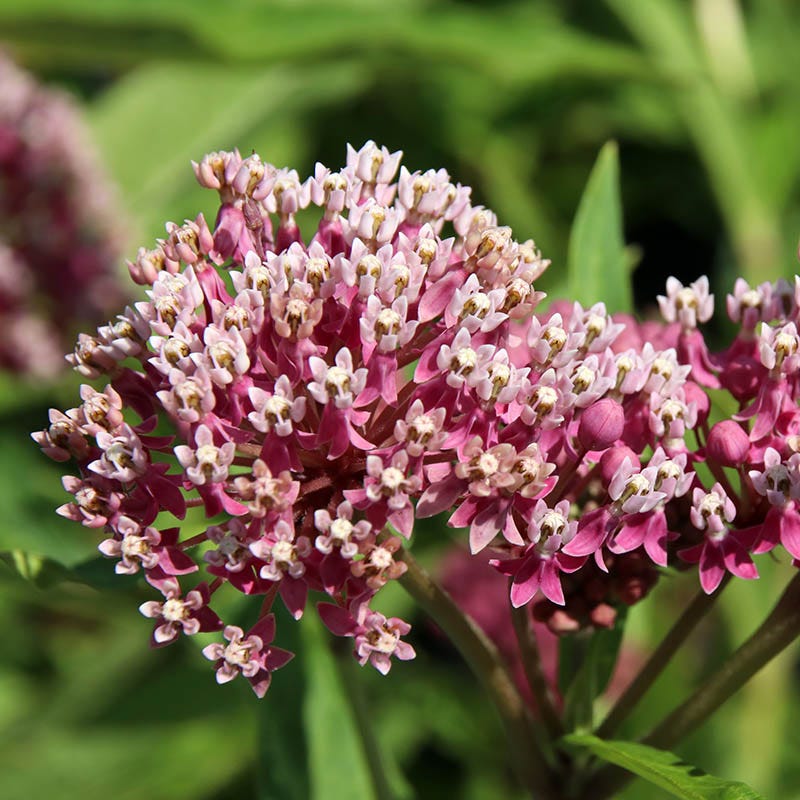
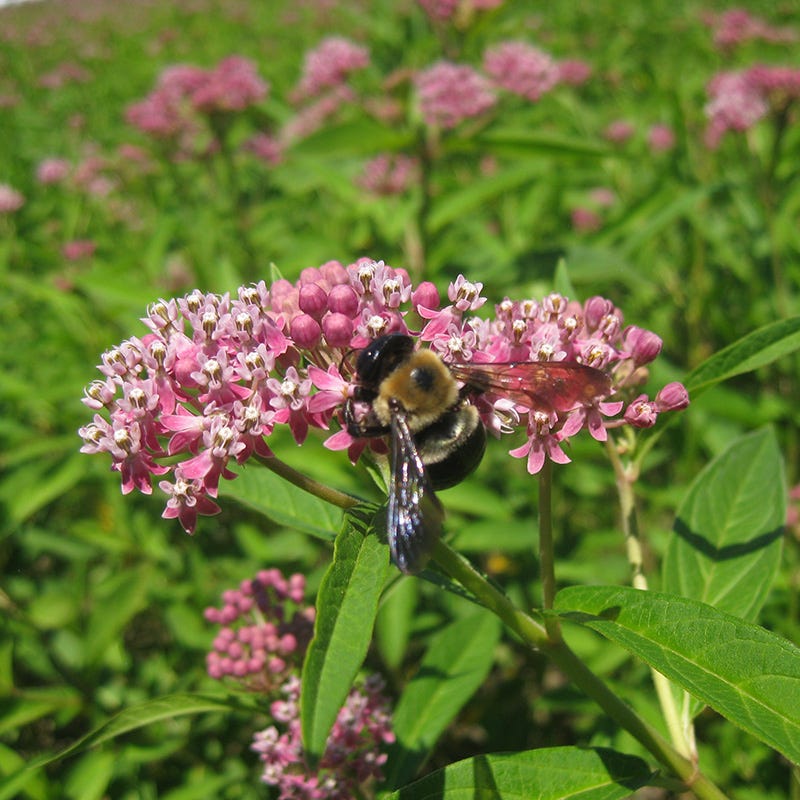
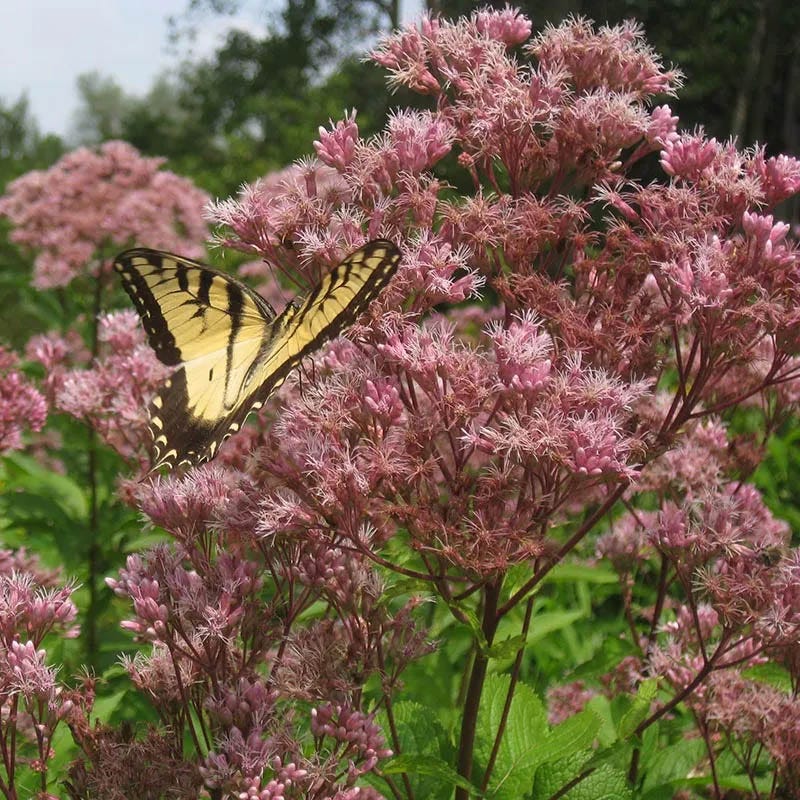
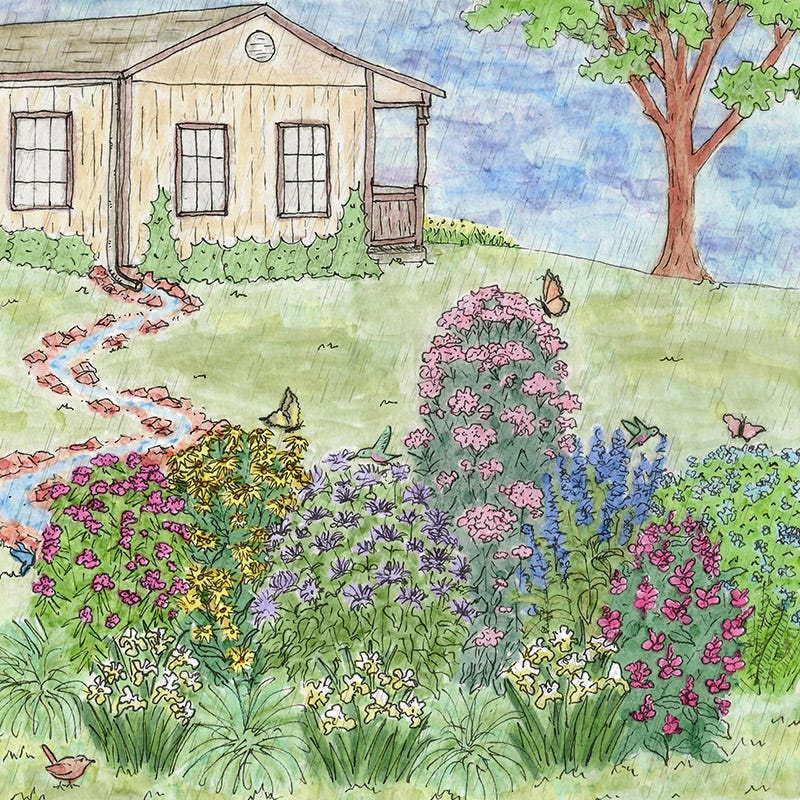
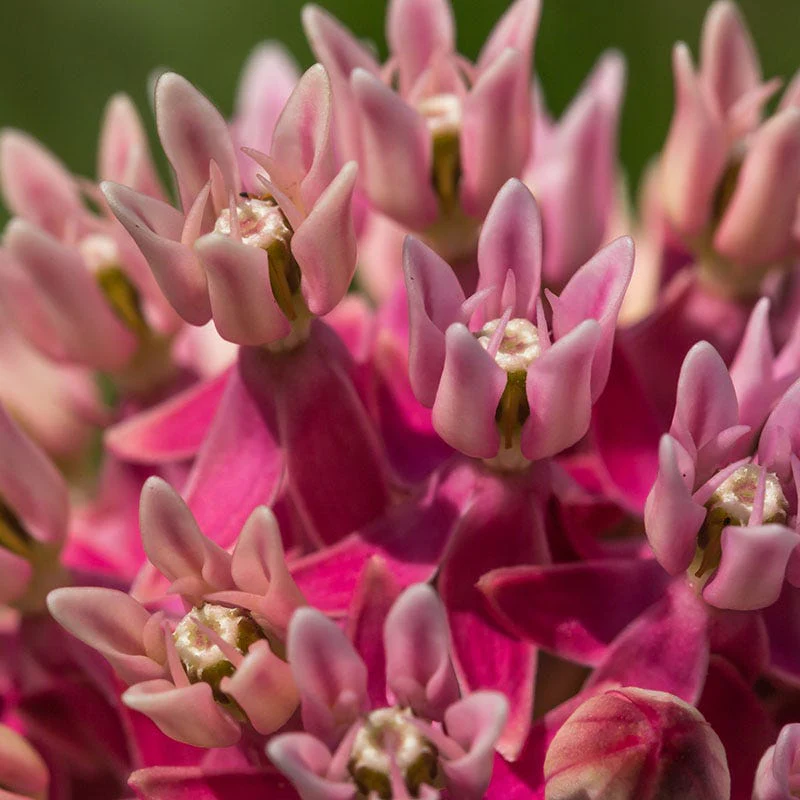
As the common name suggests, Swamp Milkweed is native to wet meadows and riparian zones throughout eastern North America. Growing along streambanks and pond edges, Swamp Milkweed looks right at home alongside water features, and its tolerance to wet soils makes Swamp Milkweed useful in rain gardens, bioswales, and other wet spots in the landscape. However, plants can also thrive in well-drained garden soils. Asclepias incarnata plants have a clumping habit and naturalize well in the landscape. Milkweed serves as a larval host to monarch and queen butterflies, so look for caterpillars munching on the leaves in early summer. In addition to butterflies, the blooms provide a valuable nectar source to honeybees, bumblebees, and other pollinators, and are occasionally visited by hummingbirds. Plants will perform best in full sun in moist clay, loamy, or average soils, in hardiness zones 3 to 6. Plants have deep taproots and are best left undisturbed once established. Be patient, as they are slow to emerge in spring.
Original: $10.79
-70%$10.79
$3.24More Images
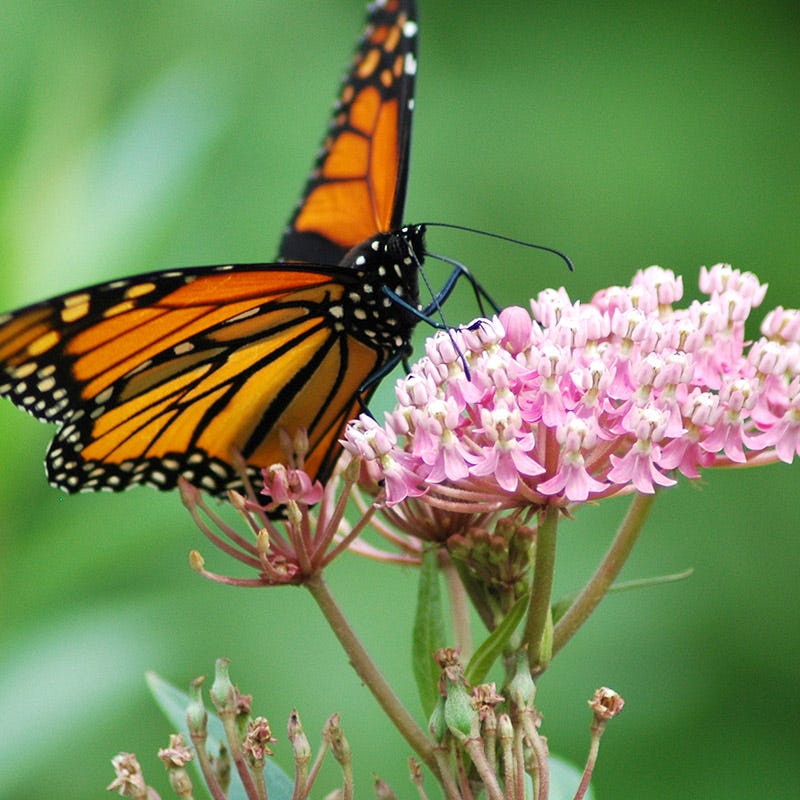
Swamp Milkweed
As the common name suggests, Swamp Milkweed is native to wet meadows and riparian zones throughout eastern North America. Growing along streambanks and pond edges, Swamp Milkweed looks right at home alongside water features, and its tolerance to wet soils makes Swamp Milkweed useful in rain gardens, bioswales, and other wet spots in the landscape. However, plants can also thrive in well-drained garden soils. Asclepias incarnata plants have a clumping habit and naturalize well in the landscape. Milkweed serves as a larval host to monarch and queen butterflies, so look for caterpillars munching on the leaves in early summer. In addition to butterflies, the blooms provide a valuable nectar source to honeybees, bumblebees, and other pollinators, and are occasionally visited by hummingbirds. Plants will perform best in full sun in moist clay, loamy, or average soils, in hardiness zones 3 to 6. Plants have deep taproots and are best left undisturbed once established. Be patient, as they are slow to emerge in spring.
Product Information
Product Information
Shipping & Returns
Shipping & Returns
Description
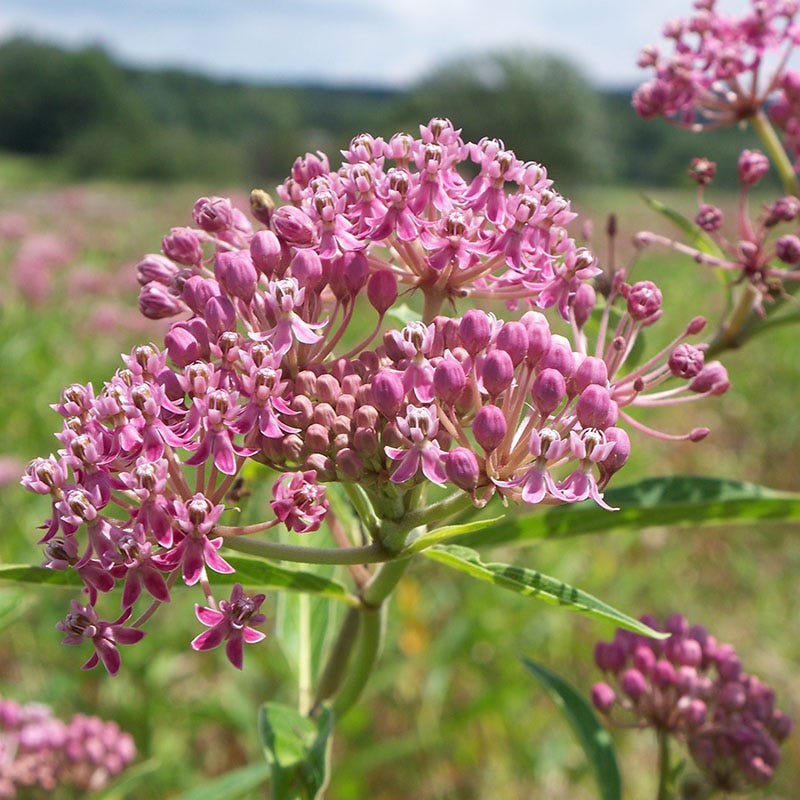
As the common name suggests, Swamp Milkweed is native to wet meadows and riparian zones throughout eastern North America. Growing along streambanks and pond edges, Swamp Milkweed looks right at home alongside water features, and its tolerance to wet soils makes Swamp Milkweed useful in rain gardens, bioswales, and other wet spots in the landscape. However, plants can also thrive in well-drained garden soils. Asclepias incarnata plants have a clumping habit and naturalize well in the landscape. Milkweed serves as a larval host to monarch and queen butterflies, so look for caterpillars munching on the leaves in early summer. In addition to butterflies, the blooms provide a valuable nectar source to honeybees, bumblebees, and other pollinators, and are occasionally visited by hummingbirds. Plants will perform best in full sun in moist clay, loamy, or average soils, in hardiness zones 3 to 6. Plants have deep taproots and are best left undisturbed once established. Be patient, as they are slow to emerge in spring.