Gloxinia Mix
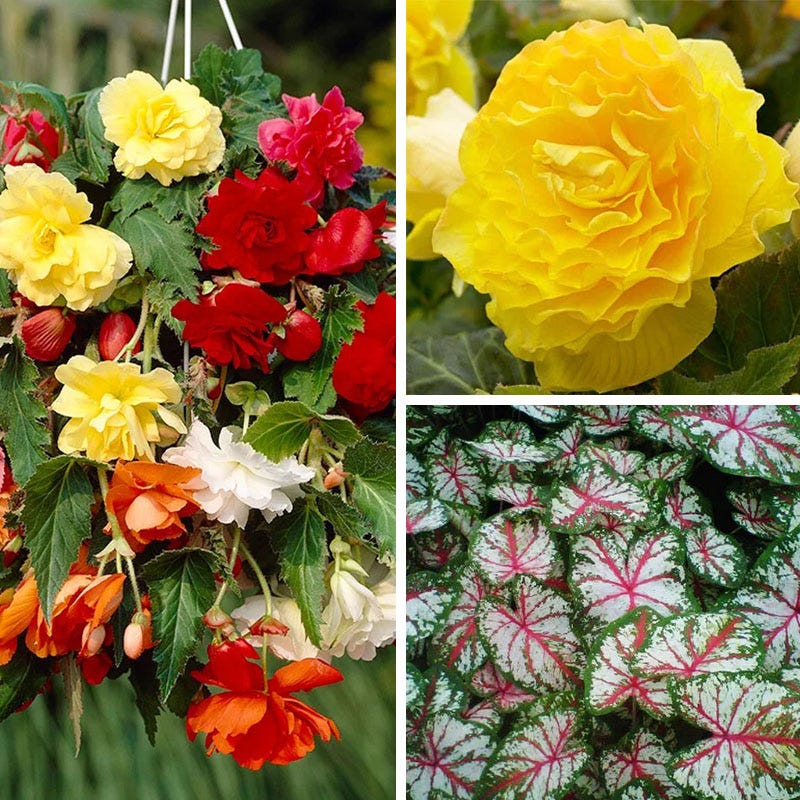
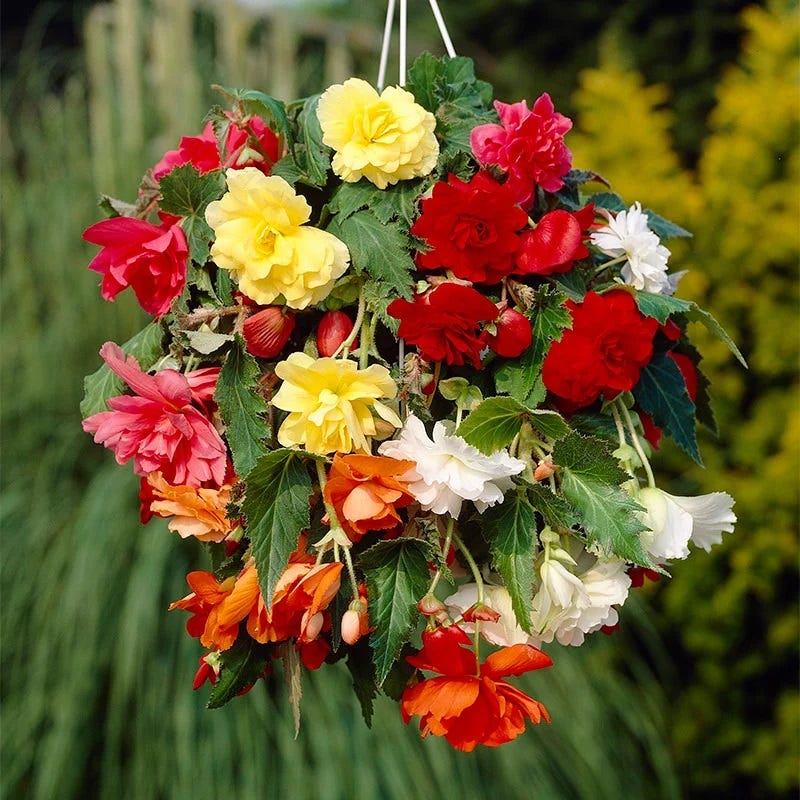
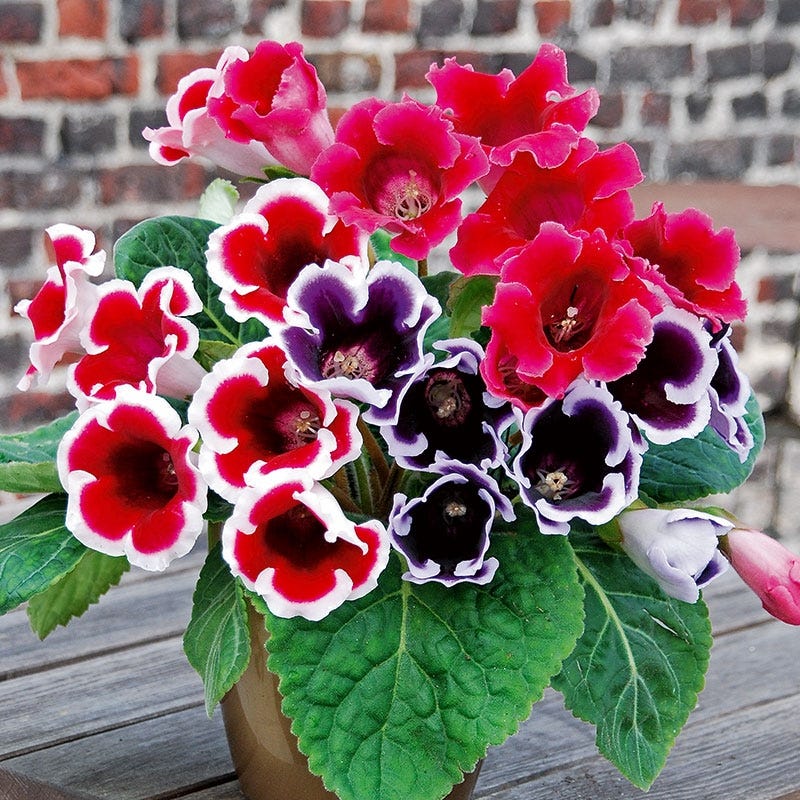
A perennial tuber, and relative of African violets, gloxinia can be grown as a houseplant that is taken outdoors in the summer, or as a lush long-blooming annual. As a houseplant they need bright indoor light with no direct sunlight, and make sure to keep them moist. In the garden, avoid full-on afternoon sun to keep the dark green rosette of soft, fuzzy leaves from turning crispy. After the long flowering period ends, gloxinia plants shift into a 7 to 9 week dormancy where the plants die completely back. During this time, move any potted gloxinia plants into a cool area and limit watering and fertilization. Outdoors, the tubers must be lifted before a hard frost and brought into a cool, dry place for the dormancy period.
Gloxinia Mix
A perennial tuber, and relative of African violets, gloxinia can be grown as a houseplant that is taken outdoors in the summer, or as a lush long-blooming annual. As a houseplant they need bright indoor light with no direct sunlight, and make sure to keep them moist. In the garden, avoid full-on afternoon sun to keep the dark green rosette of soft, fuzzy leaves from turning crispy. After the long flowering period ends, gloxinia plants shift into a 7 to 9 week dormancy where the plants die completely back. During this time, move any potted gloxinia plants into a cool area and limit watering and fertilization. Outdoors, the tubers must be lifted before a hard frost and brought into a cool, dry place for the dormancy period.
Product Information
Product Information
Shipping & Returns
Shipping & Returns
Description
A perennial tuber, and relative of African violets, gloxinia can be grown as a houseplant that is taken outdoors in the summer, or as a lush long-blooming annual. As a houseplant they need bright indoor light with no direct sunlight, and make sure to keep them moist. In the garden, avoid full-on afternoon sun to keep the dark green rosette of soft, fuzzy leaves from turning crispy. After the long flowering period ends, gloxinia plants shift into a 7 to 9 week dormancy where the plants die completely back. During this time, move any potted gloxinia plants into a cool area and limit watering and fertilization. Outdoors, the tubers must be lifted before a hard frost and brought into a cool, dry place for the dormancy period.