White Baptisia
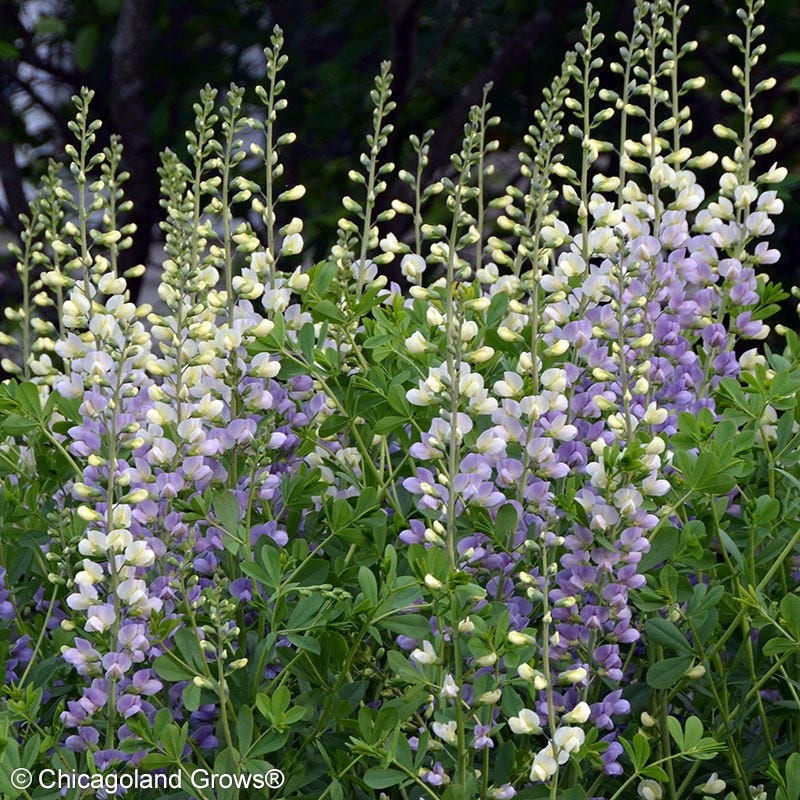
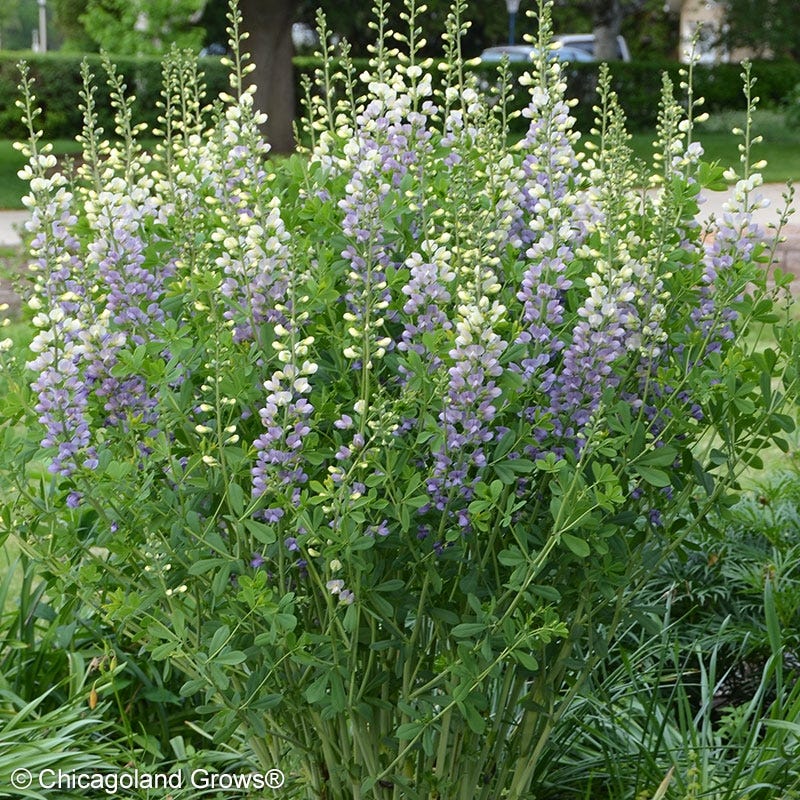
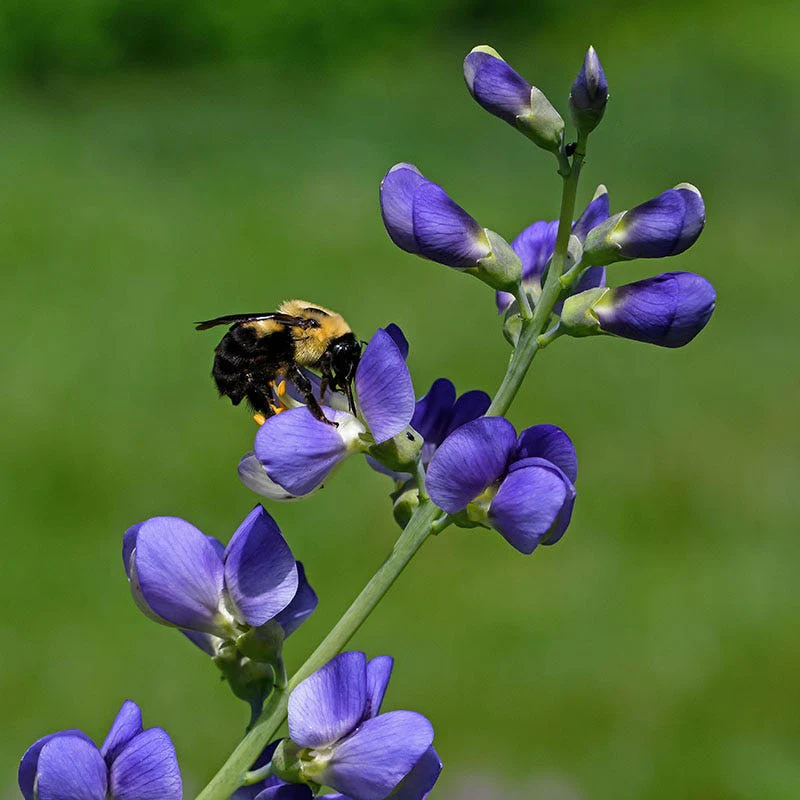
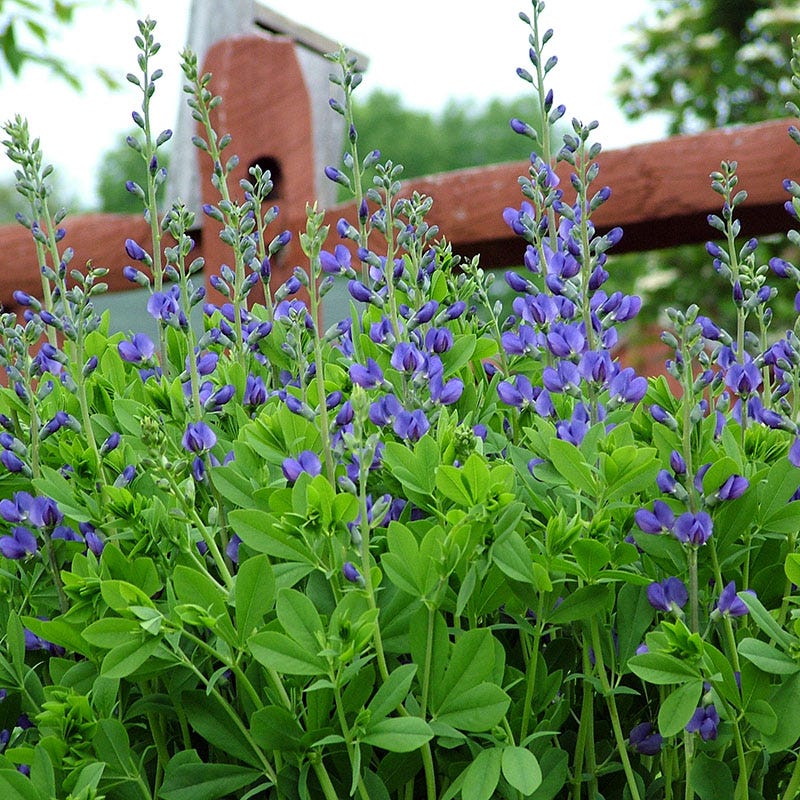
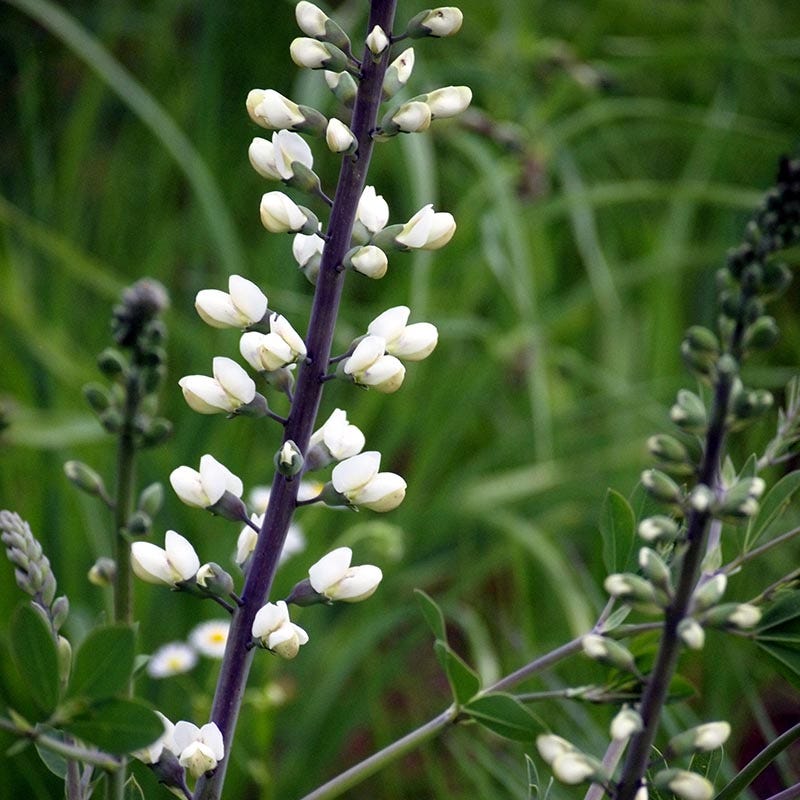
White Baptisia, also called White Wild Indigo or White False Indigo, is native to central North American prairies. Plants make stunning specimens in borders, cottage gardens, and rock gardens, and naturalize well in prairies and meadows. In the garden setting, plant among Goldenrod, Pale Purple Coneflower, Prairie Dropseed Grass, and Butterfly Weed for season-long color. White Baptisia is slow to establish in the garden, but individual plants are very long-lived. Select your planting site carefully, as plants develop a deep taproot and do not tolerate being transplanted once established. Plants tend to take on a shrubby appearance after flowering. You can trim foliage after flowering to maintain a more rounded plant form, however, this removes the seed heads which add interest late in the season. The Xerces Society identifies White Baptisia as a plant of special value to native bees and bumblebees. It also serves as an occasional host plant to butterflies, including Wild Indigo Duskywing, Hoary Edge, Southern Dogface, and Orange Sulfur Butterflies.
Original: $13.32
-70%$13.32
$4.00More Images
White Baptisia
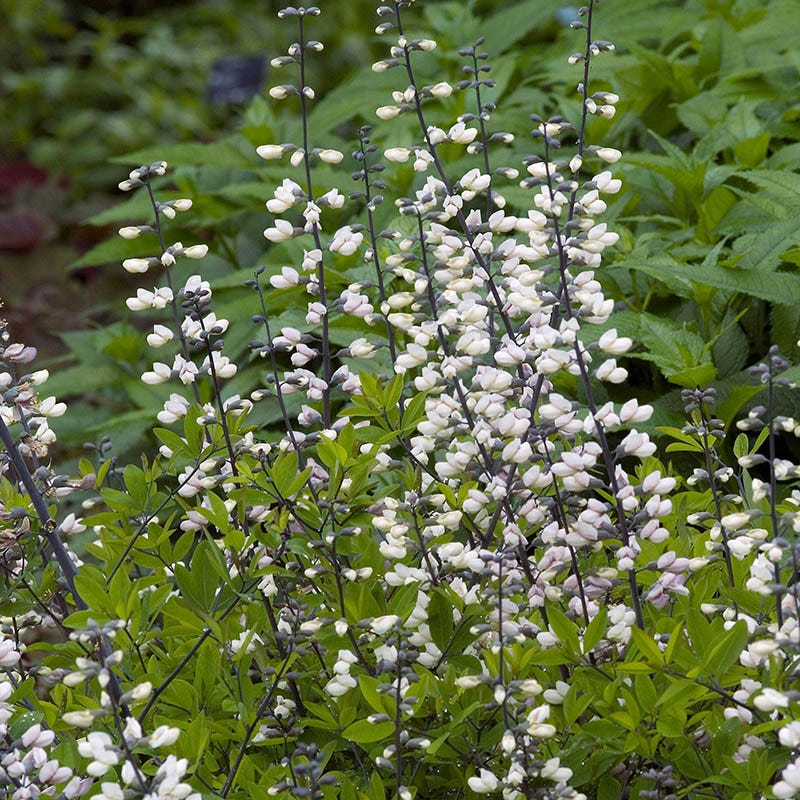
White Baptisia, also called White Wild Indigo or White False Indigo, is native to central North American prairies. Plants make stunning specimens in borders, cottage gardens, and rock gardens, and naturalize well in prairies and meadows. In the garden setting, plant among Goldenrod, Pale Purple Coneflower, Prairie Dropseed Grass, and Butterfly Weed for season-long color. White Baptisia is slow to establish in the garden, but individual plants are very long-lived. Select your planting site carefully, as plants develop a deep taproot and do not tolerate being transplanted once established. Plants tend to take on a shrubby appearance after flowering. You can trim foliage after flowering to maintain a more rounded plant form, however, this removes the seed heads which add interest late in the season. The Xerces Society identifies White Baptisia as a plant of special value to native bees and bumblebees. It also serves as an occasional host plant to butterflies, including Wild Indigo Duskywing, Hoary Edge, Southern Dogface, and Orange Sulfur Butterflies.
Product Information
Product Information
Shipping & Returns
Shipping & Returns
Description
White Baptisia, also called White Wild Indigo or White False Indigo, is native to central North American prairies. Plants make stunning specimens in borders, cottage gardens, and rock gardens, and naturalize well in prairies and meadows. In the garden setting, plant among Goldenrod, Pale Purple Coneflower, Prairie Dropseed Grass, and Butterfly Weed for season-long color. White Baptisia is slow to establish in the garden, but individual plants are very long-lived. Select your planting site carefully, as plants develop a deep taproot and do not tolerate being transplanted once established. Plants tend to take on a shrubby appearance after flowering. You can trim foliage after flowering to maintain a more rounded plant form, however, this removes the seed heads which add interest late in the season. The Xerces Society identifies White Baptisia as a plant of special value to native bees and bumblebees. It also serves as an occasional host plant to butterflies, including Wild Indigo Duskywing, Hoary Edge, Southern Dogface, and Orange Sulfur Butterflies.