Yellow Spider Lily
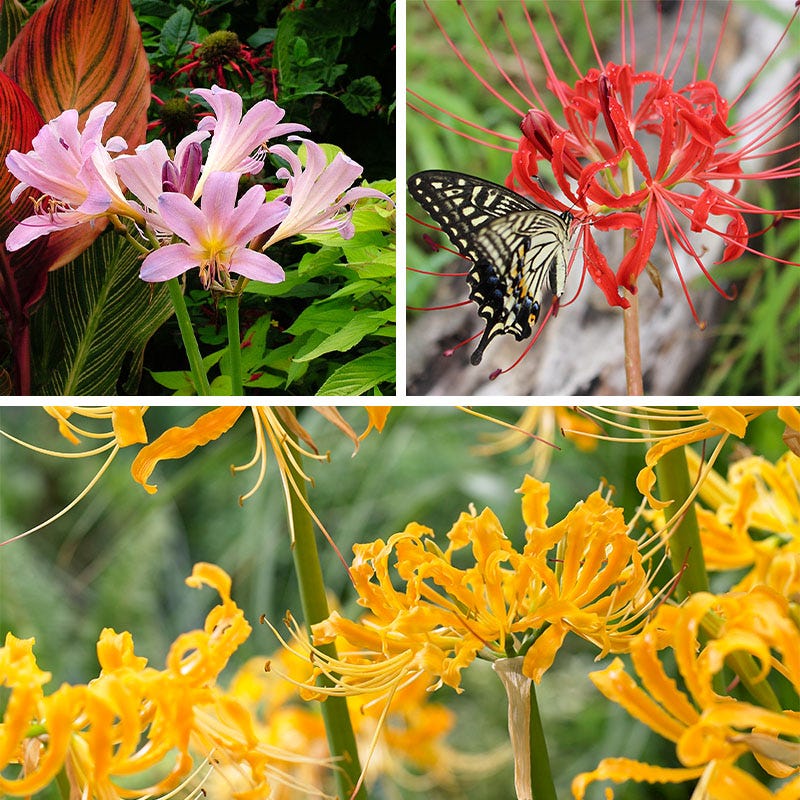
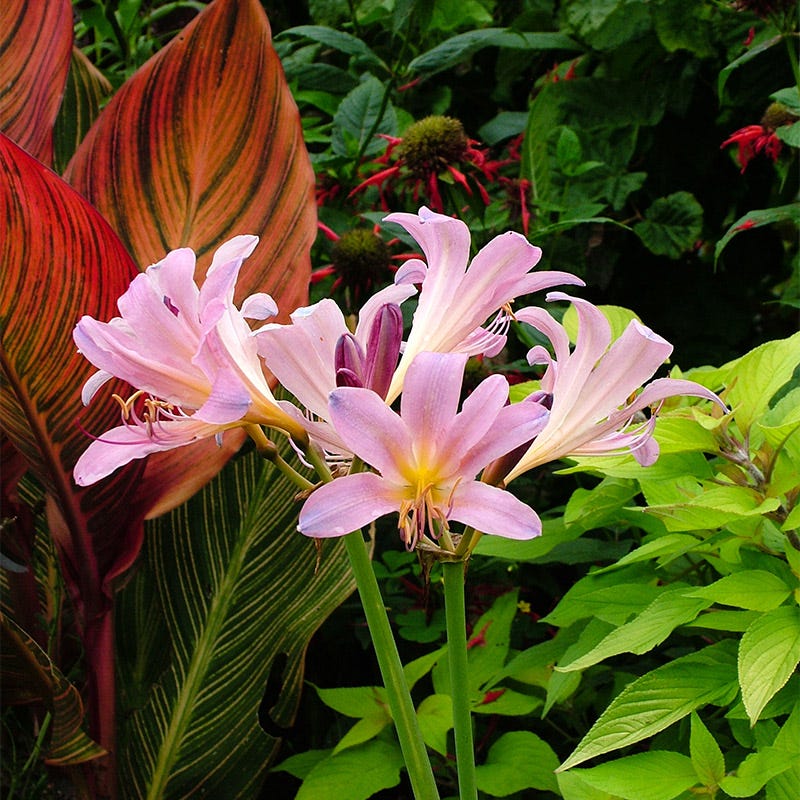
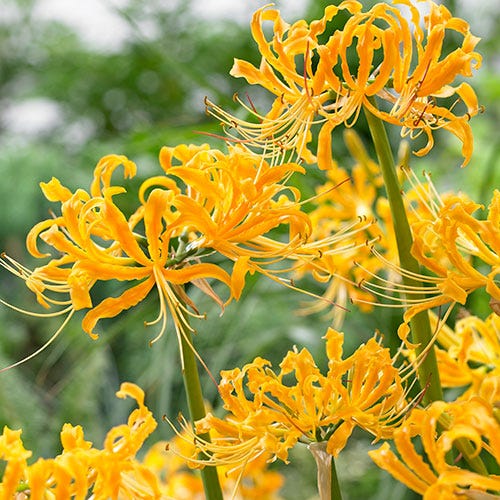
The yellow spider lily is from the Lycoris family. It’s cultivated as ornamental plants in Japan and China. In Japan it is used to line edges of rice patty fields in the summer. In the United States they are often called hurricane flowers.
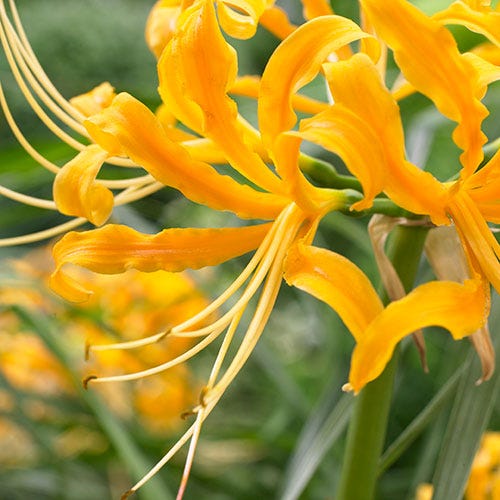
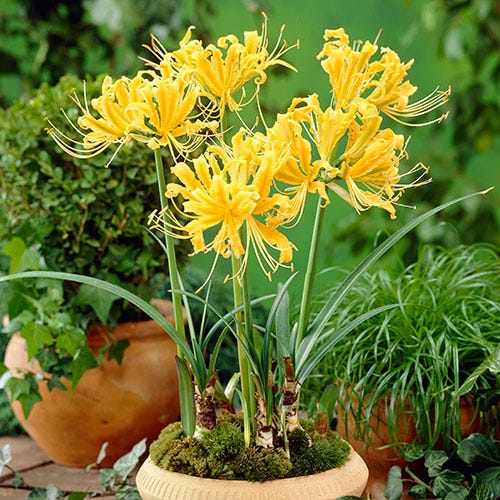
Plant CareSpider Lilies multiply over time and require full sun to part shade in the winter. Spider lilies adapt to many types of soils but prefer well drained soil. They are fairly drought tolerant and require only small amounts of water. The spider lily will present a cluster of leaves in the fall, but then will die back in late spring to early summer. In late summer blooms will appear atop a long, leafless stalk. Once it blooms, the flowers are dramatic with curled tepals and long curved stamens. You can dig up and divide bulbs once every two to four years to avoid overcrowding. Best time to divide is in summer after the foliage dies or in the fall when the flowers fade.
Best UseSpider lilies are so dramatic on their own; they do best planted in mass and border plantings. Mass plantings are usually a flower bed full of the lilies. Some examples of border plantings are, a line along a walkway, decorate fence and around an ornamental tree.
More Images
Yellow Spider Lily
The yellow spider lily is from the Lycoris family. It’s cultivated as ornamental plants in Japan and China. In Japan it is used to line edges of rice patty fields in the summer. In the United States they are often called hurricane flowers.
Plant CareSpider Lilies multiply over time and require full sun to part shade in the winter. Spider lilies adapt to many types of soils but prefer well drained soil. They are fairly drought tolerant and require only small amounts of water. The spider lily will present a cluster of leaves in the fall, but then will die back in late spring to early summer. In late summer blooms will appear atop a long, leafless stalk. Once it blooms, the flowers are dramatic with curled tepals and long curved stamens. You can dig up and divide bulbs once every two to four years to avoid overcrowding. Best time to divide is in summer after the foliage dies or in the fall when the flowers fade.
Best UseSpider lilies are so dramatic on their own; they do best planted in mass and border plantings. Mass plantings are usually a flower bed full of the lilies. Some examples of border plantings are, a line along a walkway, decorate fence and around an ornamental tree.
Product Information
Product Information
Shipping & Returns
Shipping & Returns
Description
The yellow spider lily is from the Lycoris family. It’s cultivated as ornamental plants in Japan and China. In Japan it is used to line edges of rice patty fields in the summer. In the United States they are often called hurricane flowers.
Plant CareSpider Lilies multiply over time and require full sun to part shade in the winter. Spider lilies adapt to many types of soils but prefer well drained soil. They are fairly drought tolerant and require only small amounts of water. The spider lily will present a cluster of leaves in the fall, but then will die back in late spring to early summer. In late summer blooms will appear atop a long, leafless stalk. Once it blooms, the flowers are dramatic with curled tepals and long curved stamens. You can dig up and divide bulbs once every two to four years to avoid overcrowding. Best time to divide is in summer after the foliage dies or in the fall when the flowers fade.
Best UseSpider lilies are so dramatic on their own; they do best planted in mass and border plantings. Mass plantings are usually a flower bed full of the lilies. Some examples of border plantings are, a line along a walkway, decorate fence and around an ornamental tree.